Start Seeing CVI at NIH

Thank you to CVI mom Rachel for sharing your photo and wearing your t-shirt and raising awareness of cortical visual impairment (CVI). Every time you wear your t-shirt, or tell someone “My child has cortical visual impairment” or explain CVI to the 1,000th person who says “I have never heard of that,” you help to raise awareness of CVI.

From Rachel:
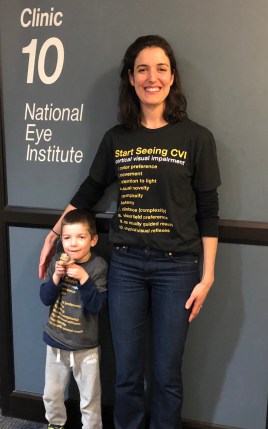
image1“At our yearly visit to the National Institutes of Health (NIH). This time they heard all about cortical visual impairment (CVI)—the leading cause of visual impairment in children in the U.S. The medical and educational fields have been slow to respond to kids with cortical visual impairment and CVI moms from across the country are joining together to change this. Here’s to the year of being a CVI tiger mom.”

Rachel shared that this was Henry’s fourth annual visit to NIH. After she provided Henry’s CVI Range Assessment report, the doctors referred to CVI as “central visual impairment” in the discussion that followed.

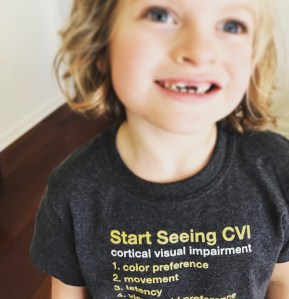
Share your Start Seeing CVI t-shirt photos on our Facebook page or email your photo and story to StartSeeingCVI@gmail.com.

CVI critical mass and advocacy

CVI critical mass and advocacy

My son is visually impaired. Learning to say those words was hard. These days I am more likely to say, My son has a cortical visual impairment (CVI). CVI is a brain based visual impairment that interferes with the ability to make sense of what you are looking at. Visually impaired is an inadequate description of my son’s vision. In seven years I have learned that most of the time, when we say blind or visually impaired, we are not talking about my son who has CVI, or about children who have CVI. When we say visually impaired, we are talking about someone with an ocular impairment, which has to do with the structure of the eye. Most everything that goes along with serving a student with an ocular impairment – accommodations, Braille, early learning, education, the Expanded Core Curriculum (ECC), orientation and mobility (O&M), schools for the blind, teachers of the visually impaired (TVI), university vision teacher preparation programs – has almost nothing to do with a child who has CVI. Continue reading “CVI critical mass and advocacy”

CVI Parents have three problems

CVI Parents have three problems
CVI Parents have three problems, photo by Patricia Harrington Simanek

My son was diagnosed with cortical visual impairment (CVI) as a newborn in 2011, before he came home from the children’s hospital neonatal intensive care unit. Like many kids who have CVI, he had a stroke. Or more specifically, hypoxic ischemic encephalopathy, HIE. His birth experience meant absorbing the diagnoses of infant stroke and CVI, as well as the great unknown that goes along with that, because CVI is not a stand alone diagnosis. The doctors, neurologists, called it cortical blindness. This was a day or two after hearing the heart breaking words infant stroke for the first time, a phrase that is not comprehensible in the moment. Cortical blindness, the neurologist said. Because his impairment involves the brain, and not the eye itself, there is nothing you can do. Instead the doctor should have said, Because his visual impairment involves the brain – there is so much you can do. This should be the message to all parents whose child receives a diagnosis of CVI. Continue reading “CVI Parents have three problems”

CVI at home, bedtime

CVI at home, bedtime

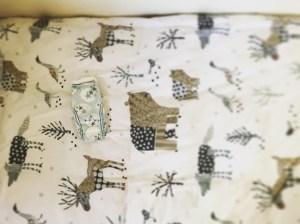
Every evening around seven thirty, our bedtime routine begins. As part of that routine, I put my son’s pajamas out on his bed. Getting ready for bed also still involves wearing a pull up. And every night I put the pull up out on the bed too – in a different spot each time. The pajamas are bigger, bolder in color, and stand out visually, they are easy for him to see. But the pastel colored pull up requires more effort. By putting the pull up in a different spot each night, my son needs to use his vision to locate the pull up against the pattern of the comforter. This approach can be used at home with so many familiar objects from our natural routines, in our natural environment.

My son is in Phase III CVI which means by now he is using his vision to perform most tasks (Roman). Some nights take longer than others, but he always finds the pull up. Each time I tell him, “Your pull up is on your bed…” And every night, my son will go over and look and say, “Mommy, you hid it!”

Star Wars and incidental learning

Star Wars and incidental learning

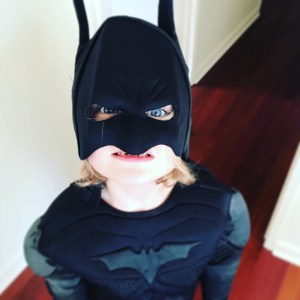
The last day of school before holiday break was pajama day. Pajamas can be hard for my son who has cortical visual impairment (CVI), especially the idea of wearing them during the day when it is not routine. When we talked about it, I made sure to suggest his favorite, Batman pajamas, to make it meaningful and help motivate him to participate in the social experience of wearing pajamas with his friends at school. “Do you want to wear stripey pajamas – or Batman?!?” “Batmaaan!!” he said throatily, excited. Continue reading “Star Wars and incidental learning”