
Learning to smile

Learning to smile
Learning to smile

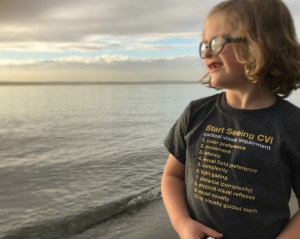
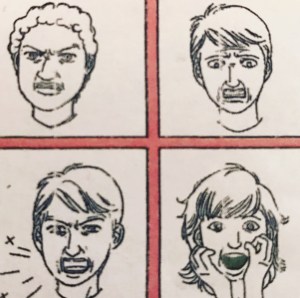
As parents of children who have cortical visual impairment (CVI), every day we experience their difficulty with the visual complexity of the human face (complexity, distance, latency, movement; Roman). Our kids struggle to look at our faces, to make eye contact with us, to read our facial expressions. They struggle to visually recognize us as their parents. Cortical visual impairment means they miss facial expressions such as boredom, confusion, frustration, sadness, worry. CVI means they also miss seeing the happiness, joy, pride, and love that it is written on a parent’s face.

What follows is the story of Emma, who learned to smile with her mom, Lynn. Continue reading “Learning to smile”
Children with CVI and seizures

Too many of our children with cortical visual impairment (CVI) are also dealing with seizures. When CVI is associated with such conditions* as perinatal hypoxic-ischemic encephalopathy (HIE), perinatal stroke, infections of the central nervous system, or traumatic brain injury, so too there is often a history or risk of seizure. Like CVI, seizures look different from one child to the next. Some children experience seizures at birth, or have infrequent seizures, while others suffer from seizures that are nearly continuous and impossible to control. As the parent of a child who experienced stroke, I have done enough research and asked enough questions to know that the risk does not go away. Again, like CVI, it does not resolve (Roman). Continue reading “Children with CVI and seizures”

CVI for first graders

CVI for first graders

When it comes to talking about cortical visual impairment (CVI) in the school setting, the topic of social skills is always a focus. Because as parents, the thing we want most for our kids with CVI is for them to make friends. We want our child to be accepted and understood. Whether talking to teachers or therapists or others who are hearing “CVI” for the first time, social skills are at the top of the list. Continue reading “CVI for first graders”

Yes, you need to understand something about CVI if you work with my child

IMG_8875
Yes, you need to understand something about CVI if you work with my child

Social skills play groups are hard to come by. And when your child has cortical visual impairment (CVI), it is even harder. For some reason, CVI does not easily translate when it comes to speech and communication providers. Surely there are exceptions, but that has been our experience. So, among other things, the last month has been about deciding whether a play group is a good fit. Finding the right fit has been like trying to fit a square peg in a round hole. Continue reading “Yes, you need to understand something about CVI if you work with my child”

Wonderland

IMG_0148
Wonderland

Preparing for our trip to Pittsburgh was more emotional than anticipated. Not the routine gathering and packing of things, but sifting through medical reports to provide background on my son’s experience coming into this world. Early on I assembled a binder divided into sections – hospitals, early intervention clinics, along with a dozen others – for collecting the medical and therapy reports that would accumulate in time. Jasper is nearly two years old. His baby book remains incomplete, lines left blank for milestones he did not reach on time, empty squares where photos should be. Instead the priority is managing this medical book, rearranging, expanding, updating. Consulting the book is emotional. Gathering those early reports is particularly difficult. Remembering, reliving. Reading about my newborn son in cold medical jargon is a harsh reminder of how difficult our beginning was.

Continue reading “Wonderland”