Jasper and the Animals

Jasper and the animals

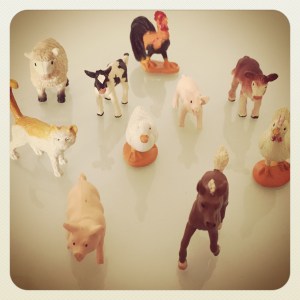
Jasper is learning from the animals. He names and sorts fake plastic animals, each one carefully described the same way, every time. Giraffe – or G-raff – is tall with a loooong neck and brown spots. Cat has pointy ears, a long tail, and whiskers. Cow has spots, udders and a wide nose. At the zoo, lion, tiger, snow leopard, jaguar are all Cats. Wolf and arctic fox are related to Dog. (salient features, comparative language, categorize, Roman-Lantzy). What makes a dog a Dog. What makes a cat a Cat. Harder than you think it is. Continue reading “Jasper and the Animals”

What we talk about when we talk about CVI, part one

What we talk about when we talk about CVI

Novelty. Complexity of array. Sensory complexity. Preferred color. These are some of the characteristics of cortical visual impairment. More importantly, these are descriptors for my son’s vision. Such words have become a second language. At times it feels like a secret language. Learning any language is easiest when you are immersed in the culture. Our cultural immersion began with my son’s infant stroke and subsequent diagnosis of cortical visual impairment in 2011. Continue reading “What we talk about when we talk about CVI, part one”

Point.

polar bear jams_SQ
Point.

Clapping, waving, pointing. For the longest time these have been descriptors for Jasper’s cortical visual impairment, explaining what his vision is, and what it is not. Well, he still doesn’t clap, wave, or point. To countless store clerks who insist on waving goodbye to young children, We’re still working on bye bye…. I say, smiling and walking away. We have practiced each one – clap, wave, point – in context, for over two years. Practiced. In our failed PEPS group, when Jasper was about a year old, another mom described her highlight of the week: when she came home from work, her six month old baby, waved to her, she squealed. Had you been practicing?? I desperately wanted to know. How did she get her baby to do that? And how could I get my own, older baby to do that? And what’s so great about waving bye bye after all? Continue reading “Point.”

Learning to ride a bike

Learning to ride
Learning to ride

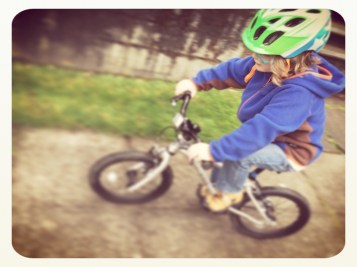
As Jasper learns to ride a bike, it is hard not to think back to those early days in 2011 when he was diagnosed with Cortical Visual Impairment. He was about a week old when his neurologist gave me the diagnosis, “Cortical Blindness” she called it. She recommended registering him with Services for the Blind and added that “color vision is usually intact.” She continued, because my son’s visual impairment involved the brain, and not the eye – there was nothing wrong with my son’s eyes – there was nothing that could be done to improve his vision. Continue reading “Learning to ride a bike”

‘CVI, A Focus on Phase III Learners’ training

Upcoming training on Phase III CVI, in Maryland, below is a link to registration page:

“Cortical Visual Impairment, A Focus on Phase III Learners”

Presenter: Dr. Christine Roman-Lantzy

June 19 – 23, 2017

This workshop is designed to provide assessment and educational information regarding Cortical Visual Impairment, specifically for children who score in Phase III on The CVI Range. Participants will gain knowledge and skill to better identify, assess, and educate children who have CVI. This is NOT an introductory CVI course!

The Institute is designed for participants who have experience and prior knowledge of CVI. This is not an introductory course!

The course content is specifically relevant for individuals who live or work with children who have cortical visual impairment with or without other disabilities.  This Institute is designed to meet the needs of regular and special educators, family members, related service providers, administrators, teachers of the visually impaired, and teachers of the deaf/hard-of-hearing who work directly or indirectly with students with dual sensory impairments and/or cortical visual impairment, Phase III.

2017 Institute Schedule

Monday – Friday, June 19 – 23, 2017

8:30 – 9:00 am            Registration and continental breakfast

9:00 am – 12:00 pm     Institute Program

12:00 – 1:00pm           Lunch (on your own)

1:00-4:30 pm               Institute Program

CVI, A Focus on Phase III Learners link to info and registration page.